
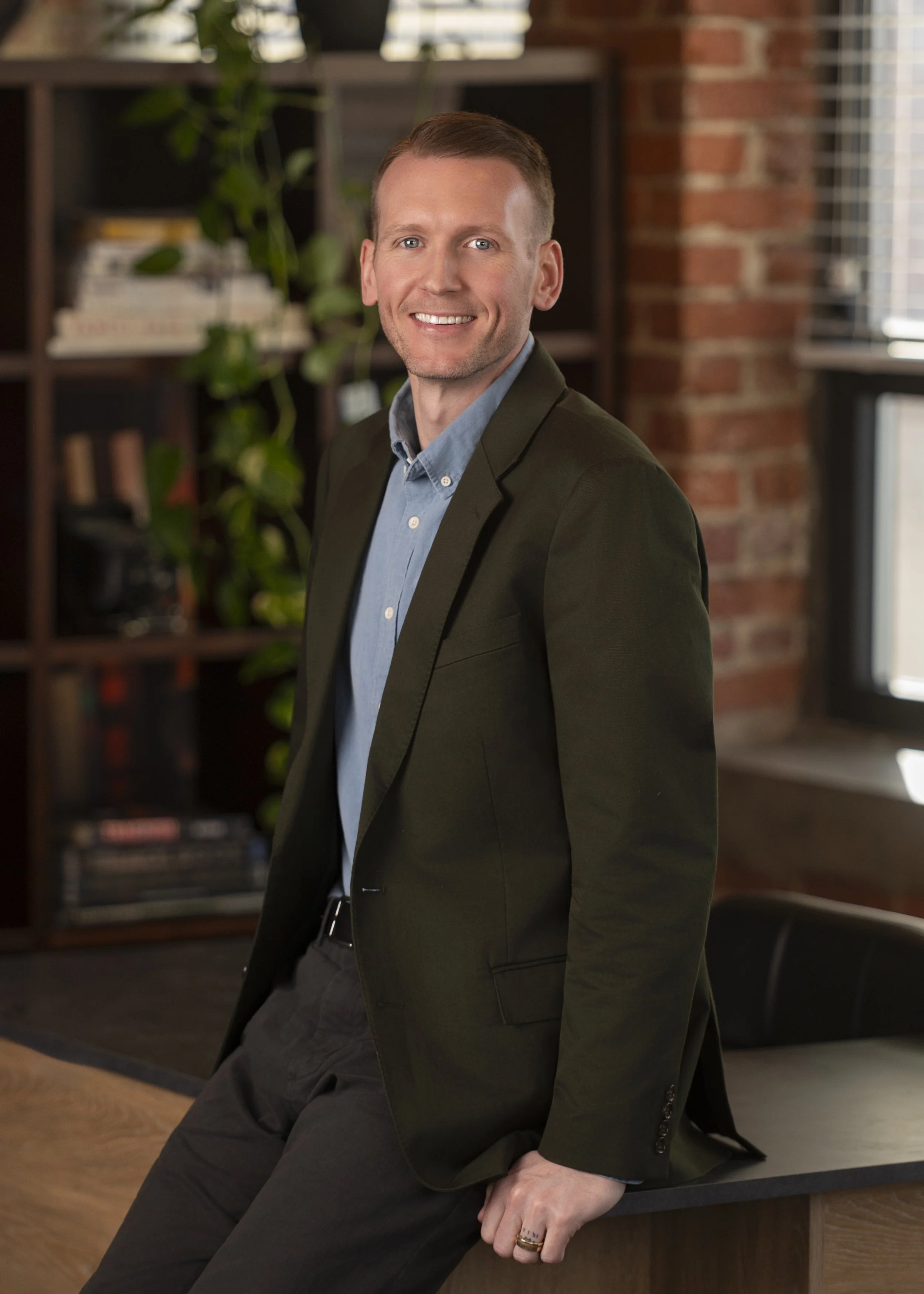
Throughout my career serving as a student services director prior to serving districts as a consultant, I experienced different cultures, different compliance landscapes, different staffing structures, different degrees of dysfunction. Each time, I walked into a role that people in the field described the same way: "It's one of the hardest jobs in the district. Good luck."
Nobody gave me a diagnostic tool to understand what I'd actually inherited. Nobody gave me a structured methodology for distinguishing what was genuinely broken from what just looked broken. Nobody gave me an instrument to calculate whether my staffing model was sustainable or a slow-motion burnout crisis. Nobody gave me a framework for measuring whether the department was getting healthier or just getting quieter.
I figured it out through experience — which is another way of saying I made expensive mistakes, learned hard lessons, and eventually built pattern recognition that took years to develop.
PULSE is the system I wish I'd had on day one. Not the day I was ready to think about organizational health in the abstract. Day one — when I was walking into a district full of people who were watching to see if I'd figure out what they'd been living with, and I needed a map, not good intentions.
About Eric Oxford, Ed.D.
Founder, Oxford Education Consultancy | Creator of PULSE
Experience and Credentials
My work in student services spans more than 15 years across teaching, building leadership, and district administration — in rural, urban, and suburban school districts.
I hold a Doctor of Education in Organizational Leadership from Abilene Christian University, with doctoral research focused on administrator perceptions of special education systems. I pursued that specific credential intentionally: I wanted the theoretical framework for understanding why organizations become fragile and how they stabilize, not just the practitioner knowledge of what it feels like when they do. PULSE is built at the intersection of both.
My administrative work has included:
• Leading student services and special education departments across four districts, managing multi-million dollar operational budgets and programs serving thousands of students
• Overseeing compliance across IDEA, Title IX, ADA, Section 504, and Civil Rights frameworks — including during state monitoring engagements
• Managing multi-site special education operations across 7 to 19 school buildings, leading teams of 30+ administrators and specialists
• Co-directing district-wide systems transformation across multiple sites
• Managing product strategy at the intersection of special education compliance and education technology
I am the author of Don't Run (2025) and Safe to Learn (2025), and my dissertation on administrator perceptions of special education support systems was completed in 2020.
I hold Massachusetts licensure as both a Special Education Administrator and School Superintendent.
What I believe about this work.
The student services director role is genuinely hard. Not in the way that every leadership role is hard — but in a specific, structural way. You are accountable for legally mandated services for the most vulnerable students in the building, responsible for compliance with one of the most complex regulatory frameworks in public education, managing the political reality of sitting between building principals and central office, and leading a team of professionals who entered the field because they care deeply and are at constant risk of burning out because of how the systems around them are structured.
That's not a personal failure problem. It’s a systems design problem.
My belief — and the belief that PULSE is built on — is that when student services departments are structurally healthy…
directors can lead with intention instead of reaction;
staff can deliver with quality instead of survival mode;
and students receive services that are not just legally compliant but genuinely effective.
The work of building healthy systems is is deliberate, data-informed, and sometimes uncomfortable. It is not glamorous. But, it is the work that makes everything else possible.
Strong systems create the conditions for people to succeed. That's what this is about.